
Foundry engineers and metallurgists who need dimensional precision under extreme heat turn to zircon. Zircon sand and flour is specified when the alloy, the geometry, or the surface finish tolerance leaves no room for error. Investment casting shops producing turbine blades, aerospace components, and complex high alloy steel parts depend on zircon flour for prime coat slurries. Sand foundries pouring high temperature alloys use zircon as facing sand and as localized chills where directional solidification and surface integrity matter most. If your process involves high melt temperature steels or superalloys where thermal shock and metal penetration are real risks, zircon is going to deliver the performance you need.
What Zircon Sand and Flour Actually Are
Zircon, or zirconium silicate (ZrSiO4), is a naturally occurring heavy mineral sand. Zircon is mined from heavy mineral deposits, washed to remove dirt and ultrafines, then separated from other heavy minerals through physical processing to produce a uniform, high-purity product.
At Carpenter Brothers, we offer zircon in two grades. Standard grade zircon sand is used primarily in sand foundries as facing sand, for cores and for chills. Calcined zircon has undergone an additional heat-treatment step that removes residual impurities and volatile content, making it the premium option. This extra processing is why calcined material commands a higher price point, and it is why calcined zircon is the material of choice for investment casting applications where surface finish and impurity control are critical.
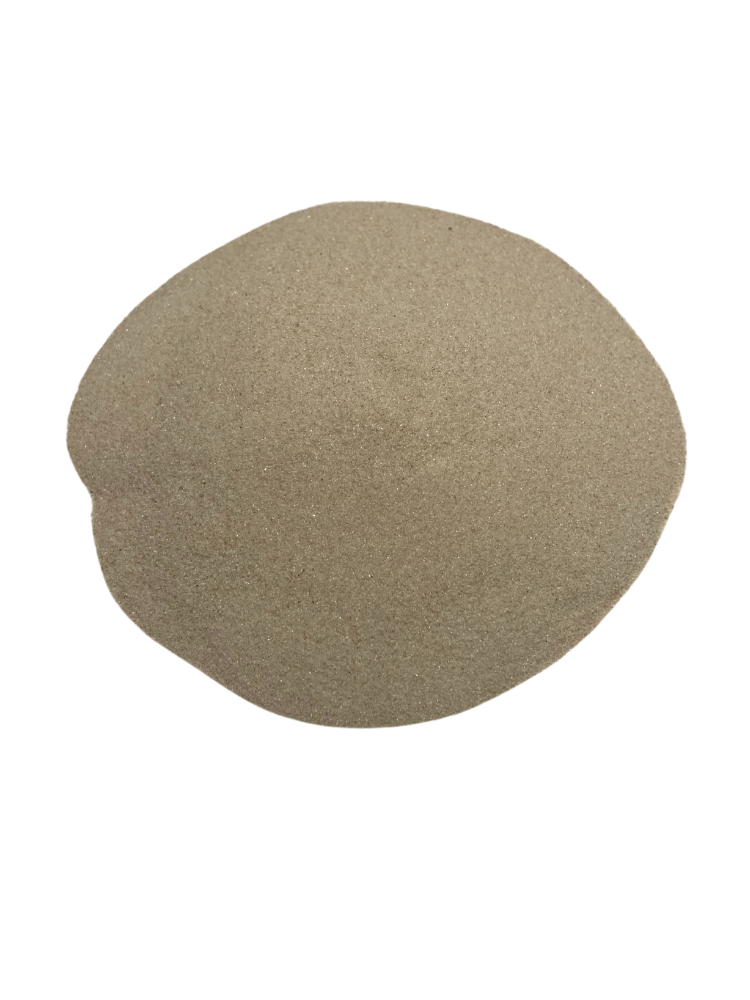
The majority of our zircon flour is calcined and is used predominantly in investment casting, primarily in prime coat slurries, backup slurry, and stucco layers of the shell mold system.
Milled zircon flour has the chemical quality of the calcined product, with ZrO2 content at 66.3% minimum, low iron oxide (Fe2O3) at 0.05% max, and controlled alumina (Al2O3) and titania, also referred to as titanium oxide (TiO2), levels that keep the flour clean and consistent batch to batch.
Why Zircon Outperforms Other Foundry Sands
The case for zircon comes down to two properties working together: low thermal expansion and high thermal conductivity.
Zircon’s coefficient of linear expansion runs around 7.2 x 10⁻⁶ cm/cm per degree C, which is less than one-eighth the expansion rate of silica sand. In practical terms, that means zircon molds and cores hold their dimensions through the pour instead of distorting as temperatures climb. For engineers chasing tight tolerances on complex castings, that stability is the whole reason zircon gets specified in the first place.
At the same time, zircon carries roughly twice the density and thermal conductivity of silica. Combined with its low thermal expansion, this gives zircon a heat absorption rate nearly four times that of quartz. That is precisely why zircon inserts work so well as local chills. They pull heat out of the casting fast enough to control solidification direction and grain structure in a specific section of the part, without the cracking or spalling risk that comes with sand that expands unevenly under thermal load. Note that the chill performance is relative to silica sand; by comparison, an iron chill is far more effective at managing solidification in an aluminum sand casting.
Zircon also brings a melting point between 2100 and 2300°C, well above what most alloy pours will ever reach, along with a Mohs hardness of 7.0 to 7.5. It resists metal penetration and burn-in, and it is virtually unwetted by most molten metals, which is a major contributor to the clean, smooth casting surfaces achieved with zircon molds and slurries. This combination of refractory strength and chemical stability is why zircon is so often reached for on high alloy steels and other high melt temperature applications where lower grade sands would break down or react with the metal.
How Zircon Gets Applied in the Foundry
In sand foundries, standard grade zircon is used as facing sand pressed directly against the pattern, giving the mold cavity surface its refractory strength and excellent finish characteristics right where the metal first contacts the mold. It also gets packed as chill material in sections of the mold or core that need accelerated, controlled cooling.
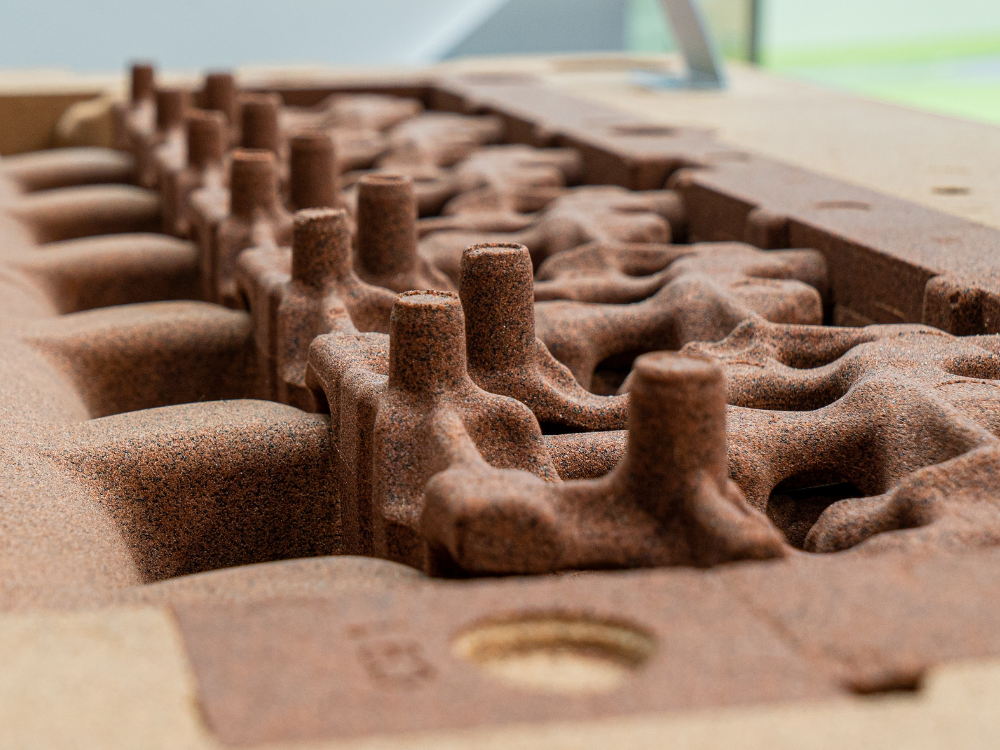
In investment casting, calcined zircon flour becomes the prime coat in the ceramic shell process. The flour is suspended in a binder to form a slurry, and the pattern is dipped so the fine, calcined zircon particles form the first layer against the wax or resin pattern surface. Because that flour has already been processed to remove impurities, the resulting shell resists reaction with the molten alloy. It helps deliver the dimensional accuracy and surface quality that investment casting customers expect, particularly on high alloy steel components poured at demanding temperatures.
The Carpenter Brothers Difference
Zircon is a premium material that is not meant for every job. It is a specialty product reserved for applications where thermal performance and dimensional accuracy are non-negotiable. Choosing between standard and calcined grades or specifying the right zircon flour for your shell system, is a decision that affects casting quality, rework rates, and ultimately your bottom line.
Carpenter Brothers Inc. supplies both standard and calcined zircon sand along with calcined zircon flour, backed by the technical data foundry engineers and metallurgists need to specify with confidence. If you are working on a high alloy steel casting, a high temperature investment casting program, or any application where lower grade sand will not hold up, talk to our team. We will help you match the right zircon grade to your process, so your castings come out right the first time. Reach out today – https://www.carpenterbrothersinc.com/.