
If your foundry is still fighting veining, burn-on, pinholes, or dimensional drift on a regular basis, the problem may not be your process. It may be your sand. Chesapeake Specialties has developed two products specifically to address these issues at the source: SphereOx Ceramic Sand and FineOx Ceramic Sand. Both are engineered for metalcasting molds and cores and are also well-suited for 3D printed sand applications. Choosing the right one for your operation comes down to your metal type, your quality targets, and your budget.
What Makes Ceramic Sand Different
Standard silica sand has served foundries for generations, yet it comes with built-in limitations. It expands significantly under heat, it requires more resin which outgases, and its angular grain shape demands more binder to achieve acceptable strength. SphereOx Ceramic Foundry Sand, manufactured by Chesapeake Specialties, was engineered specifically to solve those problems.
The chemistry tells part of the story. SphereOx Ceramic Sand is composed of over 70% Al₂O₃ (alumina) and 15-20% SiO₂, with iron oxides making up under 10%. It carries no quartz silica, meaning it is inert and does not present the silica exposure concerns associated with conventional sand. Its refractoriness rating is 1,800°C (3,272°F), placing it in high-performance territory and suitable for gray iron, ductile iron, white iron, steel, copper alloys, aluminum, magnesium, and bronze.
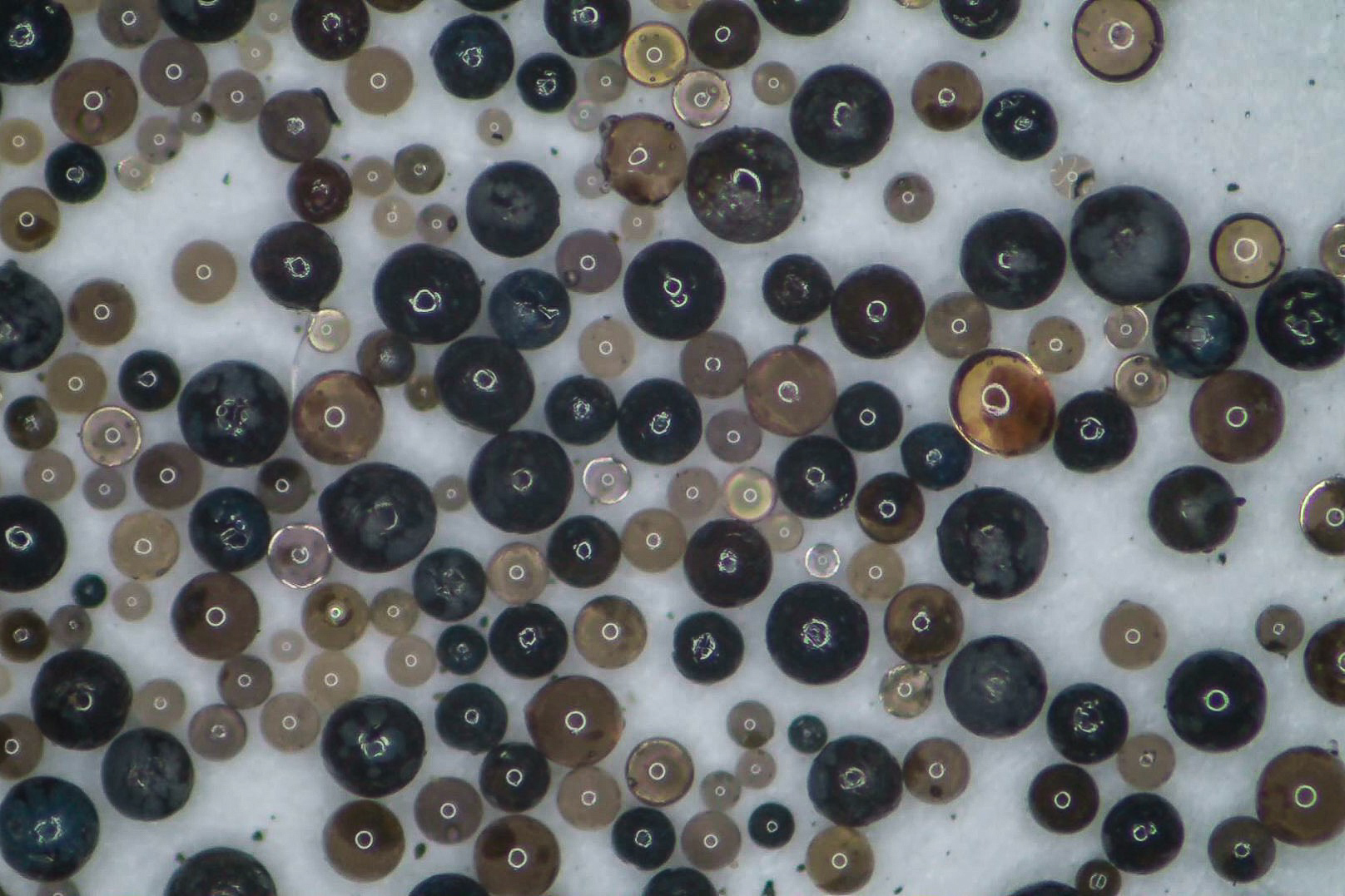
The physical form matters just as much. SphereOx Ceramic Sand has a sphericity rating of nearly 1, meaning the grains are almost perfectly round. That shape improves flowability in both conventional mixing and 3D sand printing systems, where consistent packing density is critical to dimensional accuracy. The smooth, glass-like surface, achieved through a proprietary surface-melt process, reduces the amount of resin binder needed while simultaneously increasing tensile strength.
The Numbers That Matter
Thermal expansion is one of the most important variables in metalcasting, and SphereOx Ceramic Sand outperforms every common alternative. Silica sand can expand up to 1.5-2% under heat. Chromite and zircon are better, but SphereOx Ceramic Sand stays well below both. Lower thermal expansion translates directly into tighter dimensional tolerances, fewer inaccuracies to correct, and lower scrap rates.
Density is another area where SphereOx Ceramic Sand creates a practical cost advantage. At a bulk density of approximately 124 pounds (lbs) per cubic foot, considerably less than zircon and chromite at about 170 lbs/ft³. That means you can produce approximately twice the number of molds or cores per unit of weight purchased. When added SphereOx additive is blended in, the ceramic sand also chills 30% faster than standard ceramic, which matters for solidification control on iron and steel castings.
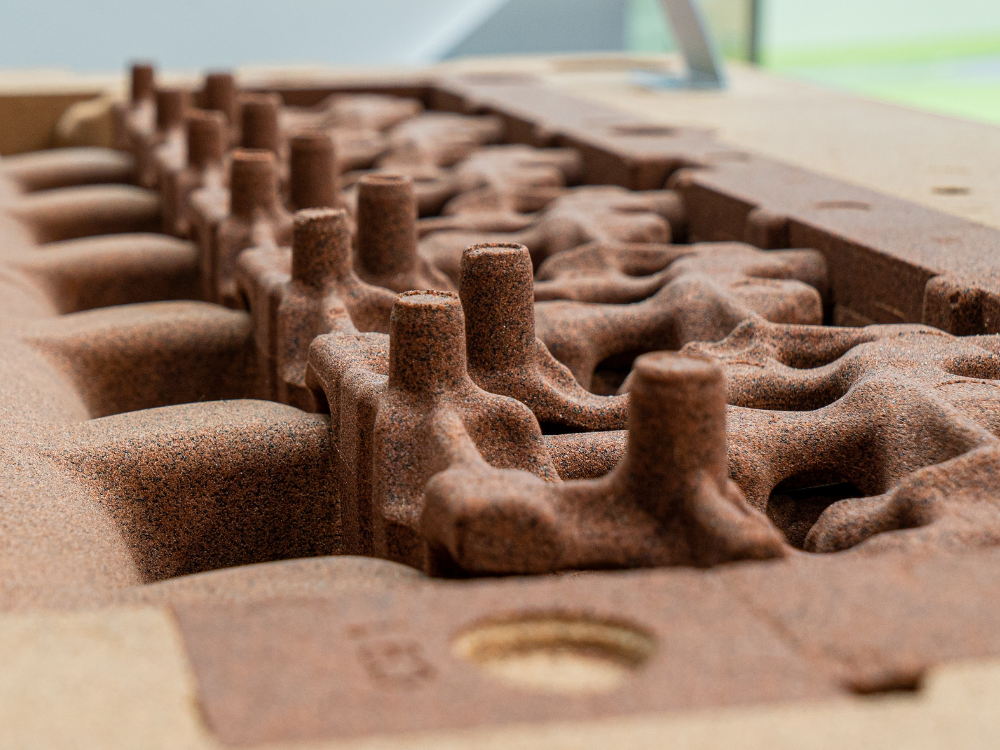
For 3D printed sand, these characteristics are particularly valuable. The near-perfect sphericity supports uniform binder jetting and consistent layer resolution. Low thermal expansion ensures that complex geometries, including thin walls and intricate internal passages, hold their shape through the pour. The sand is compatible with virtually any resin system including phenolic urethane, phenolic ester, furan, sodium silicate, shell resins, and alkyd oils, so it fits directly into existing printing workflows without reformulation.
Reclamation and Long-Term Cost
Specialty media is only cost-effective if it holds up through multiple reclamation cycles. SphereOx Ceramic Sand is engineered for durability. Its resistance to grain breakdown reduces media consumption over time and lowers the costs associated with transportation, disposal, and replacement. Foundries using reclaimed ceramic sand get more pours per ton of media than they would with silica or angular specialty sands.
FineOx Ceramic Sand
FineOx Ceramic Foundry Sand is an inert, silica-free ceramic media (Al2O3 >50–60%, SiO2 30–45%) engineered for superior casting performance. With high refractoriness (1790°C), low bulk density (1.45 g/cm³—roughly half that of zircon/chromite), and minimal thermal expansion, it delivers exceptional dimensional precision. Its rounded grain structure boosts flowability and surface finish, reducing resin consumption while minimizing veining, penetration, and burn-on defects. Superior durability enhances reclamation, cutting replacement costs. Compatible with phenolic, furan, silicate, and other binder systems, FineOx excels in aluminum, iron, steel, copper, and magnesium castings—particularly thin-wall, complex geometries demanding tight tolerances and defect-free results.
Choosing the Right Product
FineOx & SphereOx Ceramic Sand both earn the top rating for reducing thermal expansion and are well-suited to reduce veining on iron/steel castings and quality finishes.
A simple way to think about it: if you are building a new molding line, running 3D printed sand, or casting complex geometries in any metal, SphereOx Ceramic Sand is the right starting point.
Chesapeake Specialties built SphereOx and FineOx around one idea: foundries should not have to compromise between quality and cost. SphereOx Ceramic Sand delivers the highest performance in thermal control, dimensional accuracy, defect reduction, surface finish and media longevity. Both are available for sampling. Contact Carpenter Brothers Inc to match the right product to your application.
Carpenter Brothers, Inc. (CBI), founded in 1917 in Milwaukee, brings over a century of foundry supply experience to every customer relationship. As an authorized sales representative, distributor, and technical service partner for Chesapeake Specialties, CBI connects foundries across the region with two of the industry’s most effective ceramic foundry sand products: SphereOx and FineOx Ceramic Sand.
CBI’s value is not just in the products we carry, but in the technical service our team delivers. Many of our team members are former foundry engineers & metallurgists providing on-site consultation, process optimization support, and application-specific guidance to help buyers and engineers select the right product for their metal type, casting geometry, and quality targets.
For buyers managing complex procurement across molding, core-making, and sand systems, CBI functions as a single-source partner capable of supporting everything from initial product trials to full process integration. Contact us today: https://www.carpenterbrothersinc.com/