The Role of Inoculants in Iron Casting
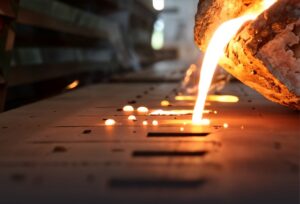
Inoculants are added to molten iron to control solidification and promote the formation of graphite rather than carbides. In both gray and ductile iron production, achieving the proper graphite structure is essential. When inoculation is effective, carbon precipitates as graphite during solidification. When it is insufficient, carbon can instead form iron carbides, resulting in chill.
Chill refers to the formation of hard, brittle carbide structures in the casting. These carbides negatively impact mechanical properties and significantly reduce machinability. Castings affected by chill can become difficult to machine, prone to cracking, and less reliable in service.
A properly selected inoculant helps:
- Reduce or eliminate chill
- Minimize carbide formation
- Improve graphite distribution
- Enhance mechanical properties
- Improve machinability
- Increase consistency from heat to heat
By optimizing inoculation practices, foundries can produce castings that meet both structural and performance requirements while reducing scrap and rework.
Understanding Standard Ferrosilicon Inoculants
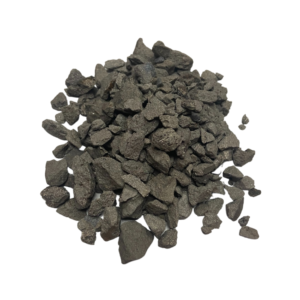
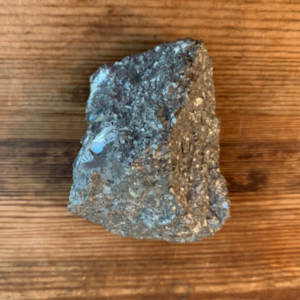
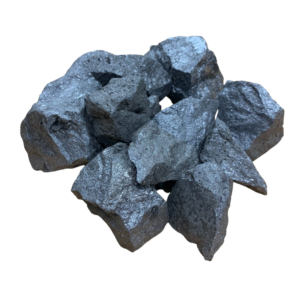
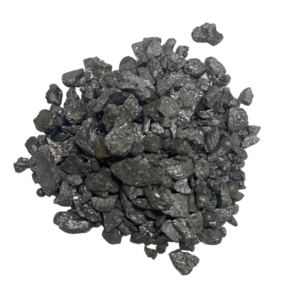
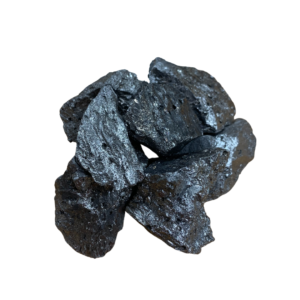
Carpenter Brothers warehouses the industry-standard 75% Ferrosilicon (FeSi) Foundry Grade inoculant used by many iron foundries. It is important to understand that not all ferrosilicon products function as effective inoculants.
Standard 75% or 50% FeSi “regular” grades are not true inoculants because they contain insufficient levels of active elements such as calcium and aluminum. While they may supply silicon, they lack the necessary chemistry to properly promote graphite nucleation.
In a 75% FeSi Foundry Grade inoculant, the silicon acts as the carrier, while aluminum and calcium serve as the active inoculating elements. As a general guideline, a combined aluminum and calcium content of approximately 2% is recommended to achieve reliable inoculation performance.
While lower combined levels may still function, dropping too far below that threshold increases the risk of chill formation. Consistency in chemistry is essential to maintaining predictable casting results.
Addressing Carbides and Persistent Chill
If your foundry is experiencing persistent carbides or chill—even when using a standard inoculant—it may indicate that a more potent or specialized inoculant is required.
Carbide formation can occur due to:
- Section thickness variations
- Rapid cooling rates
- Low sulfur content
- Insufficient inoculant potency
- Changes in base iron chemistry
In these situations, upgrading to a proprietary inoculant with enhanced nucleating elements can dramatically improve results.
Selecting the Right Inoculant for Your Application
Choosing the correct inoculant is not a one-size-fits-all decision. The ideal product depends on multiple variables, including:
- Casting type (gray iron vs. ductile iron)
- Section thickness
- Cooling rate
- Base iron chemistry
- Sulfur content
- Desired mechanical properties
- Machining requirements
For gray iron, proper inoculation promotes uniform flake graphite distribution and improved strength. In ductile iron, inoculation supports consistent nodularity and minimizes the formation of carbides or chunky graphite.
Carpenter Brothers understands that each foundry has unique operating conditions. Our technical team works directly with customers to evaluate current challenges and recommend solutions tailored to their specific processes.
Improving Mechanical Properties and Machinability
Effective inoculation directly affects mechanical performance. By promoting proper graphite formation and reducing carbides, inoculants help improve:
- Tensile strength
- Ductility
- Impact resistance
- Hardness control
- Machining efficiency
Castings with excessive carbides can be extremely difficult on tooling, leading to increased tool wear, slower machining speeds, and higher production costs. By achieving consistent inoculation, foundries can improve surface finish, reduce machining time, and extend tool life.
The result is not only better casting quality but also improved downstream manufacturing efficiency.
Supporting Consistency in Modern Foundries
Today’s foundries operate in an environment that demands precision, repeatability, and cost control. Small variations in chemistry or process conditions can lead to significant quality issues.
By partnering with Carpenter Brothers, foundries gain access to both high-quality inoculant products and experienced metallurgical support. Our team can assist with:
- Evaluating chill and carbide issues
- Reviewing melt chemistry
- Recommending inoculant upgrades
- Optimizing addition rates
- Supporting quality improvement initiatives
Our goal is to help you maintain consistent microstructure and performance from heat to heat.
Supporting Consistency in Modern Foundries
Today’s foundries operate in an environment that demands precision, repeatability, and cost control. Small variations in chemistry or process conditions can lead to significant quality issues.
By partnering with Carpenter Brothers, foundries gain access to both high-quality inoculant products and experienced metallurgical support. Our team can assist with:
- Evaluating chill and carbide issues
- Reviewing melt chemistry
- Recommending inoculant upgrades
- Optimizing addition rates
- Supporting quality improvement initiatives
Our goal is to help you maintain consistent microstructure and performance from heat to heat.